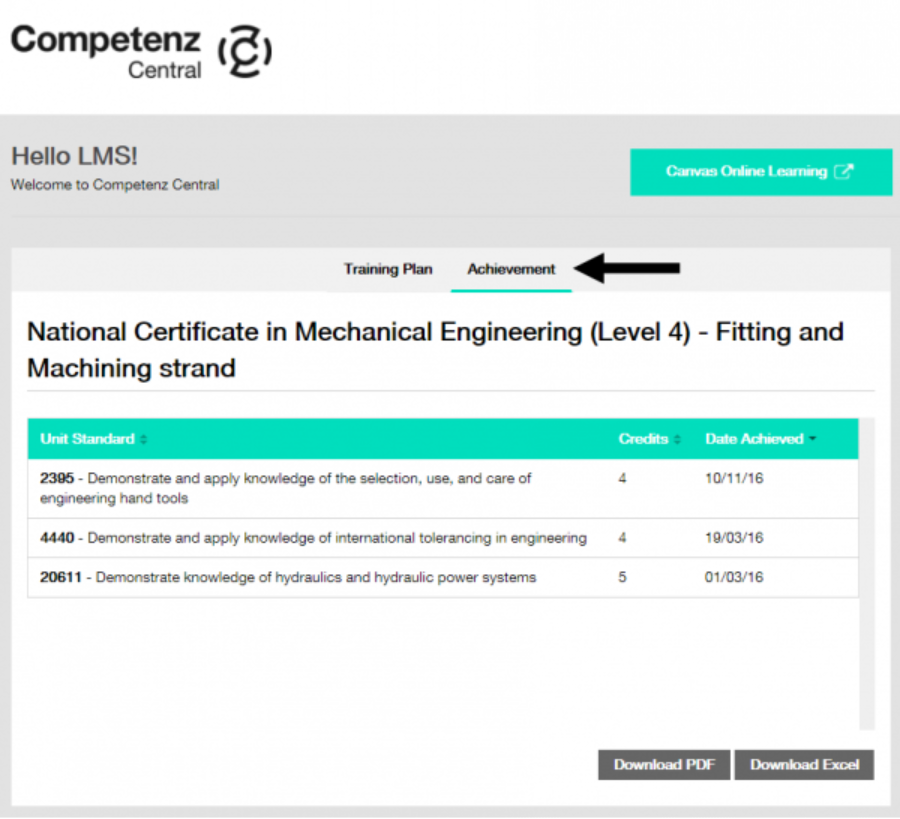
Canvas is accessible only within New Zealand and Australia.
There are no guidelines in terms of classification however Industry has adopted the following in terms of sizes a forklift operator may use.
• Forklift weighing 18000kg or less (with a load), Class 1 licence and F endorsement.
• Forklift weighing 18001kg or more (with a load), Class 2 license and F endorsement.
If a seat belt is fitted, then yes you need to wear it.A seat belt must be worn if the forklift is driven on the road. For more detailed information, you can refer to WorkSafe New Zealand's guidance on seatbelt use in the workplace.
Definition of a road (Land Transport Act 1998)Road includes:
a) A street
b) A motorway
c) A beach
d) A place to which the public have access, whether as a right or not
e) All bridges, culverts, ferries and fords forming part of a road or street or motorway
f) All sites at which vehicles may be weighed for the purposes of the act or any other enactment.
You’ll need an F endorsement on your driver’s licence if you operate a forklift on a road. Some warehouse environments may be classed as roads if they are accessible to the public.
Please refer to the definition of a ‘road’ below. For questions about obtaining the F endorsement, contact MITO.
Section 46 of the Health and Safety at Work (General Risk and Workplace Management) Regulations 2016 states: Section 46: duty to ensure young persons do not work at or with machinery
1) A PCBU with management or control of a workplace must ensure, so far as is reasonably practical, that no worker aged under 15 years –
a) Works at or with any machinery at the workplace or b) Assists with work at or with any machinery at the workplace
(2) In subclause(1) machinery – a) Means an engine, motor or other appliance that provides mechanical energy derived from compressed air, the combustion of fuel, electricity, gas, gaseous products, steam, water, wind, or any other source b) Includes
i) Any plant by or to which the motion of any machinery is transmitted and
ii) A lifting machine, a lifting vehicle, a machine whose motive power is wholly or partly generated by the human body and a tractor NB: If you require an ‘F’ endorsement on your driver’s license, the minimum age for this is 18yrs.
Competenz expects the refresher course to cover the same content as the initial Forklift Operator Certificate course, including both theory and a practical component. A new certificate will be issued upon successful completion of the refresher training.
Under the Approved Code of Practice for Forklift Trainers and Operators (ACOP), certificates are valid for three years. After this period, instructors must complete refresher training and be re-examined to confirm they remain competent to stay registered. WorkSafe endorses this requirement. Always check the expiry date on your operator certificate and arrange your refresher training before it lapses
You can find an example in Appendix D of the Approved Code of Practice for forklift trainers and operators. View the Code of Practice here.
Your registration was granted based on working for the employer at the time your registration was approved, using course material specific to that organisation. If you change employers, you will need to reapply for registration. Please contact us for further assistance.
Yes, you may apply in writing to request a review of the decision. Click here to email us.
Yes. Registering with Competenz ensures your course and performance a reaudited against nationally accepted industry standards and comply with the Approved Code of Practice (ACOP).
Yes. The Approved Code of Practice (ACOP) applies to all powered industrial lift trucks, including pedestrian-operated forklifts. Operators must hold a valid forklift operator certificate.
You must renew your forklift operator’s certificate every three years.
No. The F Endorsement authorises you to drive a forklift on public roads only and does not cover operating a forklift in a warehouse.
• The practical test is separate from the training time.
• Each trainee’s test should last a minimum of 10–15 minutes.
• Pre-operational checks and the debrief are not included in this test duration.
• New operator course: Up to two days
• Refresher course: Up to one day.
Yes, if the trainer is registered with an Industry Training Organisation (ITO) to assess unit standards or is an NZQA-accredited provider.
The most current register of forklift operator trainers can be found on our Forklift trainers page.
Yes. Most forklift training courses include practical lessons designed to teach beginners how to operate a forklift safely and effectively.
Worksafe New Zealand has provided the following detail regarding the legislation changes to the Health and Safety legislation (Health and Safety at Work Act 2015):
• The current Forklift Code of Practice still applies.
• Existing regulations and practices continue to apply.
No. Trainers should not issue certificates stating that a trainee is allowed to operate under supervision.
Best practice: Under the Health and Safety at Work Act 2015 (Section 9, Part 1), employers have a duty to provide information, supervision, and training in the use of any plant, including forklifts.
• It is recommended that new operators complete 15 hours of supervised practical experience in the workplace before attending a forklift operator course. Alternatively, they may return to the trainer later for further training and a resit opportunity.
• It is the employer’s responsibility to document any internal training procedures and to authorise the trainee to operate a forklift — but only once they are satisfied the trainee is trained and competent.
All forklift operator certificates should now reference WorkSafe, not OSH or the Department of Labour (DoL). Training programmes should also use the correct terminology: forklift operator training, not OSH training.
Yes. To meet WorkSafe’s expectations under the Health and Safety at Work Act 2015, two levels of training are required: 1. Operator Certificate (Basic Operating Skills):Forklift operators must meet the training standards outlined in the Approved Code of Practice (ACOP). This can be achieved by completing a forklift training course delivered by a Competenz-registered forklift trainer, followed by a refresher at least every three years. Equivalent training may also be accepted if it meets or exceeds the ACOP requirements.
2. Site-Specific Training: The PCBU (person conducting a business or undertaking) is responsible for ensuring the forklift operator is trained to use the forklift safely within the specific work environment. This includes addressing any site-specific risks.
Both types of training are required. Site-specific training is in addition to the Operator Certificate — it is not a substitute.
Yes — unless you hold an equivalent certification that meets or exceeds the guidelines outlined in the Approved Code of Practice (ACOP). All forklift operators must be trained in the safe operation of forklifts, in accordance with the requirements set out in the ACOP. Section 36 (Primary Duty of Care) of the Health and Safety at Work Act 2015 states that a person conducting business or undertaking (PCBU) has a broad overarching duty of care.
This includes, but is not limited to, ensuring, so far as is reasonably practicable:
• The provision and maintenance of safe plant and equipment
• The provision and maintenance of safe systems of work
•The safe use, handling, and storage of plant, structures, and substances
•The provision of any information, training, instruction, or supervision necessary to protect all persons from health and safety risks arising from work carried out as part of the business or undertaking.
This is the Approved Code of Practice which all registered forklift trainers and operators must adhere to. View the Code of Practice here.
Apprenticeship Boost provides support for employers to keep and take on new apprentices. It aims to help apprentices to earn and learn while training, so they become skilled practitioners in targeted occupations that are critical to New Zealand’s growth and sustainability.
The Apprenticeship Boost is a payment available through the Ministry of Social Development (MSD) to support employers of apprentices in their first year of training in particular qualifications. Employers can receive up to 12 months of support. Payment is currently $500 per month for eligible apprentices.
For more information visit Apprenticeship Boost - Work and Income.
Applications for reimbursement of training fees can only be submitted by learners, via the IRD, once they have completed an eligible qualification and a certificate has been issued.
No. Reimbursements for first-year Fees Free have ended.
Employers can no longer make a claim for a reimbursement for fees related to the first-year Fees free programme.
If you submitted an eligible claim before the 31 December 2025 deadline, it will be processed
For full details and the most up-to-date information, visit the Inland Revenue (IRD) website.
Learners who used first-year Fees Free funding will not be eligible for final-year Fees Free, even if they did not use the full amount they were entitled to.
The final-year Fees Free policy has replaced the first-year Fees Free policy, as of 1 January 2025.
The final 24 months of work-based training costs may be reimbursed to the learner if they are eligible. Eligible learners will need to make the claim for reimbursement via IRD once they have completed their qualification.
Visit the IRD website for full details.
The deadline to confirm eligibility for first-year Fees Free was 31 December 2025, and this has now passed. If you did not submit a complete and signed statutory declaration to TEC by this date, you are no longer eligible for first-year Fees Free.
You may still be eligible for final-year Fees Free from 2025. To check your eligibility, visit Fees Free – Inland Revenue.
No. Reimbursements for first-year Fees Free have ended.
Employers can no longer make a claim for a reimbursement for fees related to the first-year Fees free programme.
If you submitted an eligible claim before the 31 December deadline, it will be processed
For full details and the most up-to-date information, visit the Inland Revenue (IRD) website.
The deadline to confirm eligibility for first-year Fees Free was 31 December 2025, and this has now passed. If you did not submit a complete and signed statutory declaration to TEC by this date, you are no longer eligible for first-year Fees Free.
Yes. Our downloadable PDF’s are not encrypted, so you can use third-party tools or accessibility software to adjust font size, colours, or convert them to screen reader-friendly formats.
Resource updates are guided by changes with NZQA. When NZQA updates unit standards or qualifications, we review and update our resources accordingly. Any upcoming changes are published in NZQA’s monthly change report which you can view here: Change reports - NZQA
Please contact the schools team: schools@competenz.org.nz
Please check your order carefully before confirming. As we use a print on demand system with an external company we are unable to accept returns for ordering mistakes. If you believe you have received the wrong item, (different from what you ordered), please contact as at: resources.help@competenz.org
Print resources are typically delivered within 5 working days (from your confirmation email). If they have not arrived within this period, please contact us at: resources.help@competenz.org.nz
Upon ordering resources, you will be sent a downloadable link with a PDF to your email used to purchase. Please note this download will expire after 7 days.
In any other circumstances we are unable to email PDF’s of our resources.
We aim to provide the most current versions of print resources wherever possible. However, in some cases, a sector may shift to online-only content, which is available exclusively to Competenz learners. We will continue to supply valid, print-ready unit standards for schools as long as it is practical to do so.
If you spot an error or something unclear in the resources, please email a clear description or screenshot of the issue to resource.help@competenz.org.nz. This will help our design team review and correct the materials as quickly as possible.
No, each teacher must create their own unique login and password to access school resources.
If you need help or have any questions about accessing resources, placing orders, or technical issues, please contact the Competenz Schools Support Team:
They will be happy to assist you!
Please follow the prompts to reset your password through the website.
These materials are protected under the Copyright Act 1994 (NZ) and the publisher (not the purchaser or institution) retains full copyright. Unless under specific licensing agreement in writing, there is to be no copying, scanning, sharing or uploading without a license. This applies to print and digital copies.
No, you generally cannot photocopy, scan, or alter these resources as they are protected under copyright and intellectual property rights. Copying them, even for educational purposes is not permitted without explicit permission from Competenz.
To register, visit the login page and enter your details to create an account.
Please note: We have updated our website in July 2025 and you will need to re-register if you have logged in previously. Once this is done simply log in using your credentials.
Level 2 has a theory component and a practical assessment. For the practical assessment please read the first 1-4 pages of the Assessment Guide in each unit standard.
No, projects your students undertake in school are the evidence and learning they develop and use towards the assessment of the standards. A project is deemed acceptable so long as the project meets the learning intentions of the unit standard.
1. Go to https://www.nzqa.govt.nz/framework/explore/index.do and enter your school's name
2. Click on your school's name, and under Consent to Assess click the link 'these standards and groups of standards':
Yes, they can be used individually, or together and in any order.
No, your learners may complete any project, as long as it shows they meet the assessment criteria.
For the practical assessment please read the first 1-4 pages of the Assessment Guide in each unit standard.
Yes please see table below.
We do not have new examples in the works at the moment, but we welcome ideas or you sharing current projects that we have not presented within the project exemplars.
Yes, please ensure you check the unit standard expiry date and version. You can do this via NZQA.
Please note: It is preferred that schools use the new unit standards. They have been created specifically for use in schools. Industry and teacher input, and collaboration was sought regarding skills and knowledge required for school leavers.
Applications for reimbursement of training fees can only be submitted by learners, via the IRD, once they have completed an eligible qualification and a certificate has been issued.
Learners who used first-year Fees Free funding will not be eligible for final-year Fees Free, even if they did not use the full amount they were entitled to.
Download the Fees Free assessor spreadsheet template
For any questions about the Fees Free training reimbursement process, please email us.
Download the Fees Free employer claim guide and declaration
Download the Fees Free claim spreadsheet template
Not sure if you are eligible to claim reimbursement? Use this form to find out.
Employers can find information and claim forms here. Forestry employers and assessors can find their specific forms here. If you're unsure about your eligibility to claim reimbursement, use this form to check.
Download the Fees Free claim guide and declaration
You are eligible to claim reimbursement of your provider’s invoice for a Competenz learner directly from us if:
Apprenticeship Boost ended December 2024. Payments willcontinue for a maximum of 24 months per apprentice.
Apprenticeship Boost provides support for employers to keep and take on new apprentices. It aims to help apprentices to earn and learn while training, so they become skilled practitioners in targeted occupations that are critical to New Zealand’s growth and sustainability.
The Apprenticeship Boost is a payment available through the Ministry of Social Development (MSD) to support employers of apprentices in their first year of training in particular qualifications. Employers can receive up to 12 months of support. Payment is currently $500 per month for eligible apprentices.
Learners who accessed first-year Fees Free will not be eligible for final-year Fees Free. The last opportunity to report adjustments for first-year Fees Free is during the 2025 wash-up process in early 2026.
Fees Free for learners continuing in 2025: If you started training in 2024 or earlier and are continuing the same qualification in 2025, your fees will be covered until the end of 2025 or until your entitlement runs out.
For work-based programmes extending beyond 2025: Any fees incurred after 31 December 2025 won't be covered, so learners will need to arrange payment. Encourage your 2024 learners to check their Fees Free eligibility as soon as possible to make sure they don’t miss out on their first-year entitlement. Learn more here.
Learners should use the NSN checker tool at FeesFree.govt.nz. After entering their NSN, study type, and intended study year, the tool will return one of four statuses:
We will endeavour to keep the FAQs on this webpage as current as possible. The Fees Free website is a good resource for learners. The TEC website is continuously updated and is a good resource for employers.
Eligibility depends on specific residency, prior study, and training criteria for work-based learning. Check the full eligibility criteria on the Fees Free website. Learners can use their NSN with the TEC’s tool to check eligibility.
Check the learner and programme eligibility criteria for work-based learning.
The Tertiary Education Commission (TEC) also has a tool available for learners to check their eligibility using their NSN.
We will send you correspondence regarding an update on your learner’s eligibility when it is available. If you believe the information we have regarding your learner’s eligibility is incorrect contact TEC.
Our schools’ team are always keen to be involved in as many opportunities as possible. We love introducing learners to new ideas and vocational pathways. Email us on schools@competenz.org.nz to see if we have availability.
Workforce Development Councils (WCD) manage the Consent to Assess process. Hanga-Ara-Rau is the WDC for Manufacturing, Engineering and Logistics.
If you have a query about national external moderation, consent to assess, consent and moderation requirements (CMR), reach out to moderation@maeisb.nz
Follow the link https://www.competenz.org.nz/resources/categories/apparel
Schools have base scope to Level 2, but you will need to check that you have CTA for Level 3.
Head to competenz.org.nz/schools/resources/resources/engineering-industry
Our Gateway programme is currently being reviewed in preparation for successful programmes in the future. However, we are currently offering work experience placements, please contact schools@competenz.org.nz to discuss. Gateway is not available for 2025.
Pricing varies depending on your industry and the apprenticeship/traineeship model selected.
Call our Customer Services Team on 0800 526 1800 or email support@competenz.org.nz and we can arrange for someone to visit your workplace to discuss your training needs.Use this ROI calculator to view the approximate cost of an apprenticeship.
The first step is to call our Customer Services Team on 0800 526 1800 or email support@competenz.org.nz. We will arrange for someone to visit your workplace to discuss your training needs.
Competenz offers a free digital self-service job board which makes it easy to create and post your job advert with our step-by-step job ad builder, helping you reach the right candidates. Add link to website
All customers who have a balance on their account with Competenz at the end of the month will receive a statement detailing any unpaid invoices. Alternatively, please call our Customer Services Team on 0800 526 1800.
Competenz prefers payment by Direct Credit deposit to our bank account.
When making payment it is important that you include your Competenz Account Number as a reference – this is an eight character number beginning with ‘CC’ and can be found on your invoice or statement.
Our bank account number is also shown on our invoices and statements.
We are now offering the option of quarterly payments of annual fees (for Elev8 and Canvas). Please contact ar@competenz.org.nz for more information.
The best way to view the progress of your learner(s) is through Competenz Central.
Competenz Central allows you to see the training plan details of your learner(s) through the tile called eServices.
Click into eServices:
Click on the name of the learner you want more information on:
Click on Training Plan Detail, then click the Unit Standards drop down and change the selection to Show All.
If a unit standard is complete then a date will show in the Date Assessed column.
Please be aware that it can take between 1 – 3 months for unit standard results to be entered into our database.
See the Competenz Central help section for more information about how to access Competenz Central.
Are you logging in on the correct page?
Have you successfully logged in before?
Can't remember your username/email?
Can’t remember your password?
Still can’t login?
Receive the welcome email or text message
If you have requested a login for Competenz Central, or your Competenz contact has advised that a login is on its way, then expect a welcome email like this:
If you cannot find the email, please check your junk mail folder.
Sometimes email filters prevent Competenz emails from being received. If this is the case, our Customer Services Team can send you a text message instead of an email.
Call our Customer Services Team on 0800 526 1800 or email support@competenz.org.nz and let us know your name, date of birth, company/employer, and your cell phone number. We will then send you a welcome text message like the below:
Enter your date of birth
Once you click the link sent to you in the email or text message you will then need to enter your date of birth. This helps us check we’ve sent the link to the correct person.
Make sure you enter your date of birth in this format: dd/mm/yyyy
For example:
If your date of birth does not match with the information held in our database, you will need to contact our Customer Services Team.
Create your login details
Once you have entered your date of birth, you can then create your login by entering an email address for your username and a password.
Your password must be at least eight characters long, and contain an uppercase, lowercase and number.
Please send an email to your training advisor or account manager for support.
If you are an assessor, please specify which company or companies you assess at/for so we can make sure we give you visibility of these companies.We will need to verify your access with your Competenz contact first, so please be aware that your request may take some time.